Tasting the "Future of Coffee" at Blue Bottle Coffee Studio, Kyoto
On rare beans, kissaten culture, and what coffee can become
Taken at the Blue Bottle Coffee Studio, Kyoto
When I started working in coffee in my late teens, I was lucky enough to spend time on a farm in Tanzania, then move on to roasters in Barcelona and Gothenburg. Those experiences and the people I worked with shaped most of my coffee knowledge, and they still do.
At the time, anaerobic fermentation, co-fermentation, and newer processed cultivars hadn’t yet arrived at our cupping tables. I had studied Coffea arabica and Coffea robusta, but varieties like Excelsa, Liberica, and Canephora were only ever mentioned in passing. Shrouded in mystery it was years before I tasted some Liberica beans, and when I finally did, the experience was underwhelming.
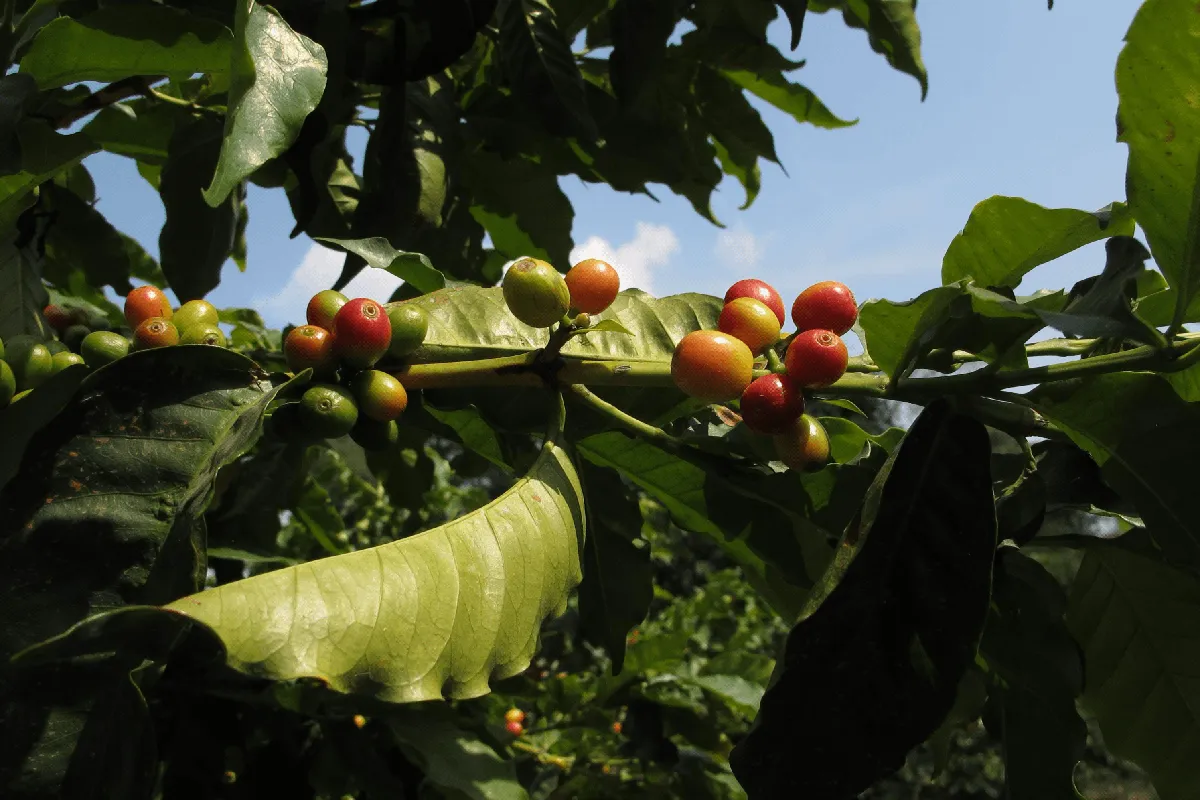
Coffee beans ripening. Tanzania, 2015
That was eleven years ago. Yesterday, I sat in a room in Kyoto and found myself thinking harder about coffee than I have in a long time. It is now as I write this that I start to realise how singular this coffee experience was.
“Future of Coffee” is held on the second floor of a century-old machiya near Nanzenji temple, on Kyoto’s east side. The first floor houses the shop and café, beautifully renovated. Upstairs, the setting is capped at five seats, warmed by a vinyl record player running a playlist curated by Blue Bottle founder James Freeman. A quiet signal of jazz, kissaten culture, and an exploration on the new horizons for coffee.
The ninety-minute course uses everything but arabica or robusta. Liberica, Excelsa, and Canephora take the main stage, sourced from India, Malaysia, and Vietnam. Beyond the beans themselves, the course also works with coffee leaves, flowers, and the fruit’s flesh “cascara”, if you’ve come across it. The studio only opens in spring and autumn, with the current experience running until the 18th of May.
The course opened with three infusions, each from a different part of the coffee plant. The coffee flower infusion was my favourite. Aromatic, complex, like walking into a temple: wood, cinnamon, sandalwood, clove. I had smelled fresh coffee flowers before in Tanzania. This drink captured something of that memory.
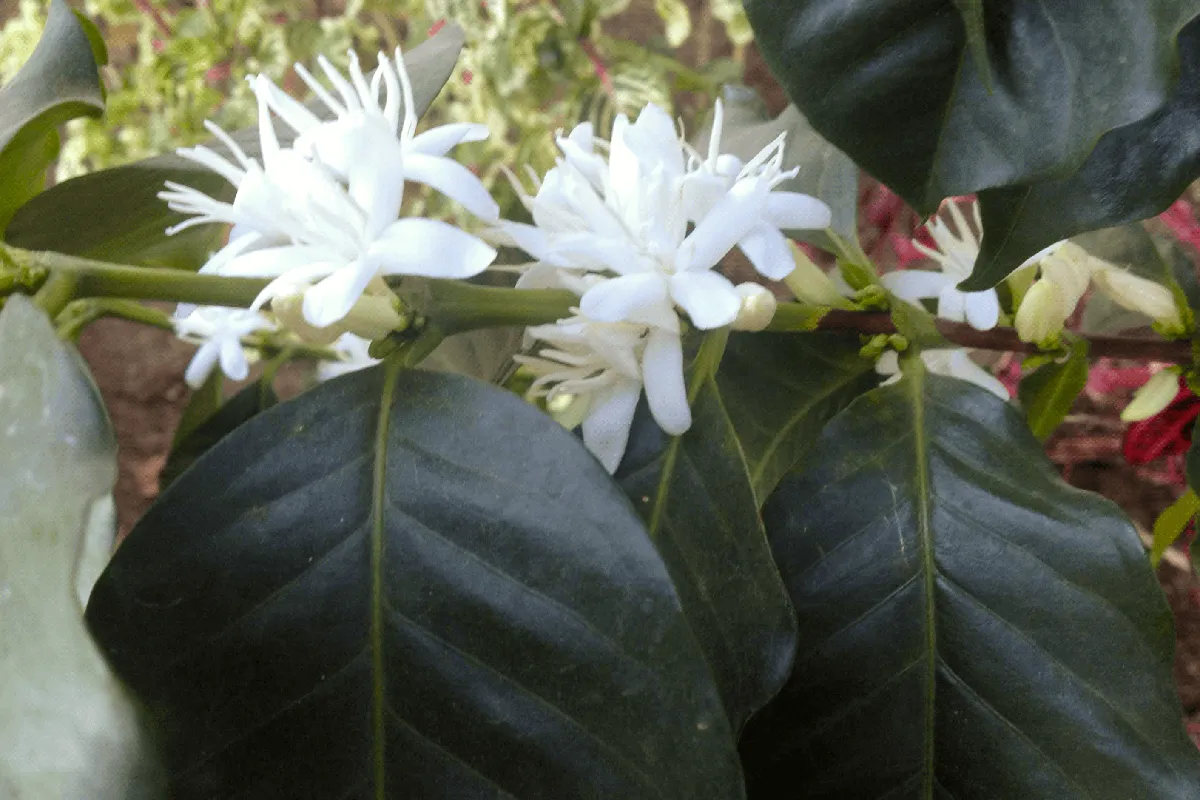
Coffea arabica flowers. Tanzania 2015.
What followed was a flight of drinks that weaved between the novel and the familiar. A soluble coffee that had no business being as good as it was, I have been truly interested in this new wave of soluble options out there. Three side-by-side infusions with three countries, three processing methods, three different ideas about where production is heading. Then, a kissaten-influenced cloth drip filter, with a notably dark roast that produced something almost balsamic, dense as espresso. It shocked the room and made everyone laugh. One of those refreshing moments where a drink goes somewhere you genuinely didn’t expect.
The course closed with a Kagoshima rum digestif with herbs and spices, mine without the alcohol, still a satisfying way to end. In between drinks as needed, the vinyl records would be changed as they approached the end of their songs, creating a clean break between drinks. Allowing for space to process the previous drink and enjoy the view before the brewer would start the next drink.
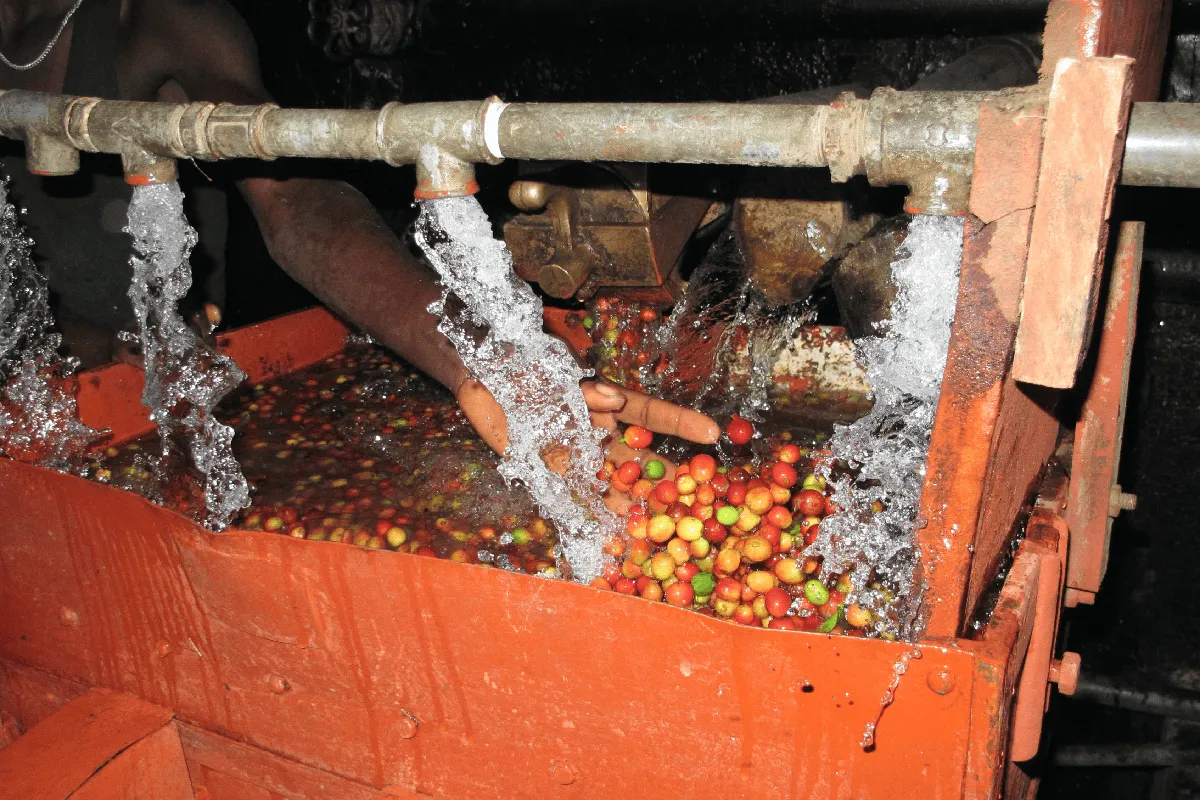
Processing washed coffee. Tanzania 2015.
What does the “Future of Coffee” actually mean? I kept thinking on the question over during the course and after. The easy answer is rare beans and novel processing methods. But sitting in that machiya, watching the morning light come through the window, I think it’s something less technical than that. The best experiences in coffee, like the best experiences in anything, leave you changed in some small way. This one did. Coffee still has the ability to surprise you. That morning reminded me why it drew me in to begin with. If that’s what the future looks like, I’ll take it.