Pre-SSC, Study week 1
Definitions, yeast rabbit holes and rediscovering sake foundations
Following my introduction to the SSC last week, first week of preparations is over! I wanted to share my progress through the course book, which is massive and I’ve barely made a dent in it. Not only is the book lengthy, but its details run deep in some particular areas. Sometimes it introduces things then adds more details later, so it seems going back and forth is a must.
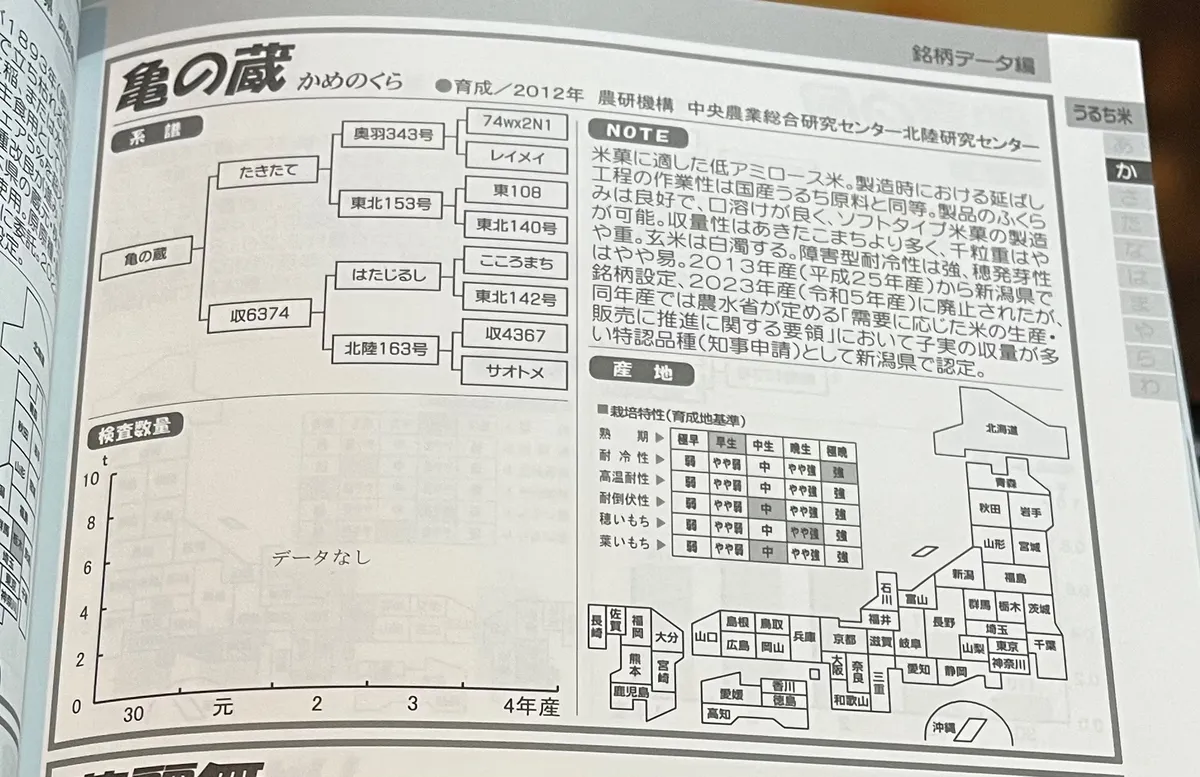
Supplementing regional rice knowledge with other books.
Studying the book started strong, with a nice introduction on how the course got started in the first place. Then, some key definitions are already flying scattered around the first pages. What is regionality in sake, is there such a thing? What is terroir, what does it mean in the context of wine, how this has morphed and made its way to other products. What is terroir and what is regionality in sake is such a provocative question and an interesting topic to think about. As mentioned in the book, sake brewers tended to perfect the brew, the craftsmanship of it, not protect any regionally defined character or specificity.
I believe these are essential in many aspects of Japanese culture, be it raw agricultural products, tool making, or anything really that a craftsman sets their mind to perfecting.
That said, I study sake to learn its different regions, approaches, ingredients and what has shaped it, culture, geography and lifestyle for example. The working definition of sake regionality for the course encompasses those topics, looking beyond the immediate land and looking into its complex web of elements. Those are essentially what the entire course is based on, providing both the structure and the particular topics to be studied later on, which are:
- Environment - Climate, soils, topography, not only around the brewery, but how those have affected the decisions and the tools available in that area for example.
- Rice - An essential ingredient, looking beyond it we can find regional connections, god offerings, lost strains and more importantly an identity, sometimes regional, sometimes local, but for the Japanese it is also a self-identity as well.
- Water - It not only shapes many of the decisions of sake brewing; its minerals steer what feeds the brew a lower level than rice, yeast, and koji rice do. Rivers provide a key logistical route in some areas, providing paths to deliver goods in the region and a source of food. Rivers, lakes, and the terrain work the rice paddies, wash brewing tools, clean our rice, and help cook it as well. Water is one of the life songs weaved into anything really.
- Human element - Brewery workers and particularly the master brewer (Toji) shape subtly how we brew and consume the sake. Their choice of ingredients, techniques, and their own honed skills have a bigger impact than what they subtly do on a daily basis. They see patterns, shapes, and character, adjusting minimally in some cases, but those make or break a brew.
- Microbes - Both yeasts and Koji-kin, without them, we will not have fermentation. Both are the engine and the fuel of sake, uniquely fulfilling both roles simultaneously. They were in old times, and in some cases today too, the inhabitants of the brewery, dwelling in beams, tools, and trays. To me personally, they are a key element of identity, each yeast strain evolving and developing to its immediate environment and household.
- Culture - Cuisine is a big one, but so are regional traditions, history, and even religious activities. While part of it might be commonly overlooked, in some cases, completely overturned by another one, it gives deep insight into regional developments, shapes who conducts the brew, and is the glue that bonds a region at a macro scale, and a brewery team at a micro scale.

Gnocchi demanding a study break.
For now, I’ve barely dug into the different prefectures; so far, I have only made a deep dive into Ezo, nowadays Hokkaido Prefecture, home to snowy and cold weather and also extensive farmland.
This week I have been really focusing on relearning the basics, both in terms of regionality described above but also reaffirming and rediscovering foundational knowledge on sake like general geography of the country and some of its climatic differences across the long stretch of latitudes the country has. From the north, Hokkaido Prefecture at a latitude similar to my home region in northern Spain, to the south, whose latitude somewhat aligns with Taiwan, Egypt, part of the Sahara, and northern Mexico.
Then, I have taken a bit of a deeper dive into some of the different yeasts we will be studying across the book. I have started north to south to follow the general structure of the book. I also gathered information on these minute cells that hold so much power in the brew, but also express so much of what might have influenced their evolution in a particular brewery or region. I took a bit of an interest in particular towards the Association Yeast No. 6, first because my previous notes and the text in the book did not match, then learning to pay close attention to isolation dates and commercialisation dates, which can be considerably different.
After that deep dive, I also learned quite a bit of other northern prefectures’ yeast, so far looking into Hokkaido and the north lands of the Tohoku region. While I had read about most of the more common yeast, it has been fascinating to learn some more about this in the context of their prefecture, with some fun surprises along the way. Did you know about Giovanni? Apparently, it’s a yeast from Iwate prefecture and it has a great background story connected to a novel.
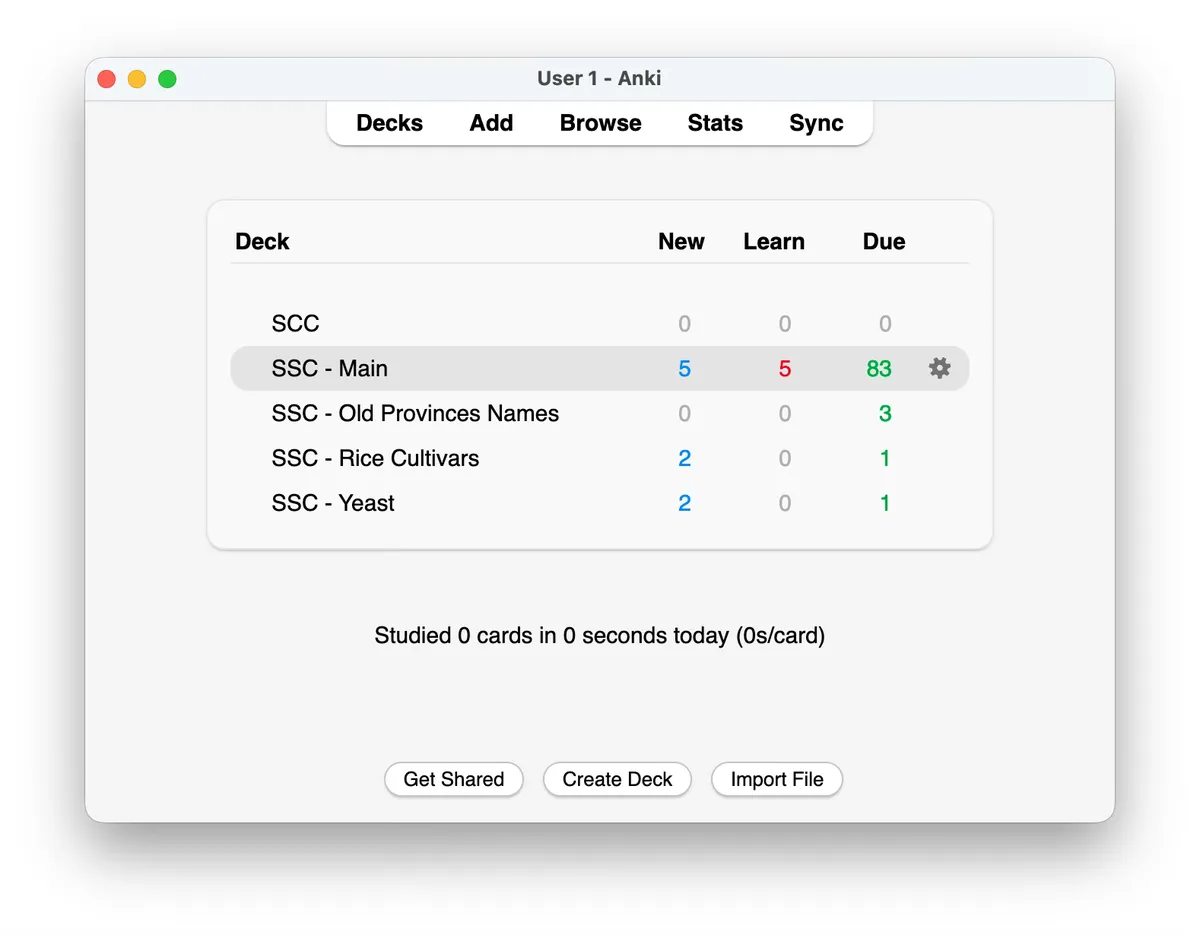
Progress being made one flashcard at a time.
Lastly, another big topic, as mentioned in my introduction of this series, is names. The raw amount of names is overwhelming; mountains, valleys, rivers, yeast, and regional rice names have accounted for the biggest chunk of study so far. Gathering those in flashcards is tricky as names alone can be difficult to memorise just on their own, so I had to look for topographical maps to pinpoint some of these land features and make them easier to remember. One incredibly useful tool was unexpected in helping with this, the old provincial names that Japan had until 1868 and that are also studied during the course.
The old provinces, sometimes village and town names, are sprinkled all over the place, informing guild names, new and old revived rice strains, mountain ranges, rivers, and other essential pieces of information. Learning some of those made my mind click on several occasions.
We have covered quite a bit of terrain after checking my notes for this post, but to be completely fair, I still have sections I either skipped over for now or need to revisit to create flashcards and make sure I have all the information I need or to revise some more complex information like all the yeast mash developments, which are straightforward once you know them, but there are a lot of small details to memorise.
Next up, fermentation mash, yeast mash developments, koji-kin, and a couple of deep dives into the Tohoku prefectures. More on sake regionality next week!